
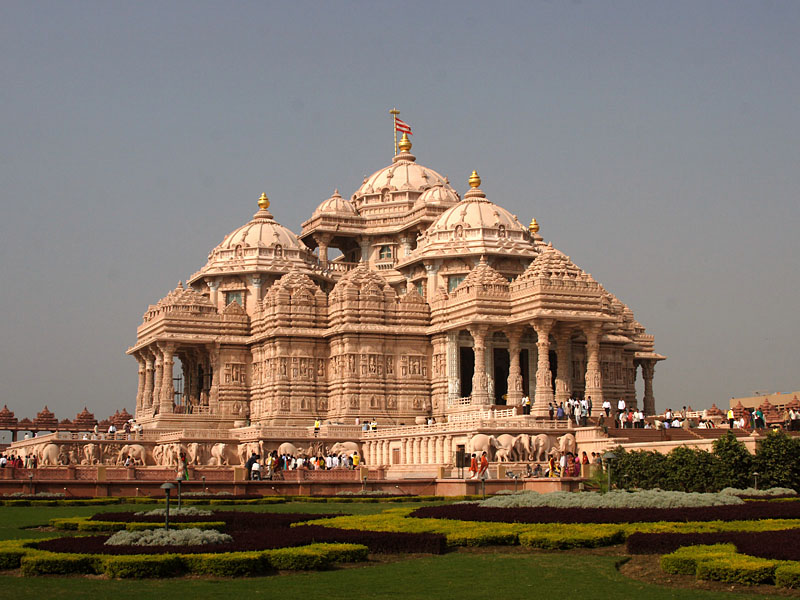
Akshardham Temple, Delhi
Overview
The Akshardham Temple, also known as Swaminarayan Akshardham, is a magnificent Hindu temple complex located on the banks of the Yamuna River in Delhi. It is dedicated to Bhagwan Swaminarayan and showcases traditional Indian and Hindu culture, spirituality, and architecture. The temple is renowned for its stunning architecture, intricate carvings, and expansive gardens, making it a major tourist attraction and a place of worship.
Historical Significance
- Inaugurated: November 6, 2005.
- Significance: The temple complex was built under the guidance of Pramukh Swami Maharaj, the spiritual leader of the BAPS Swaminarayan Sanstha. It aims to promote the values and teachings of Bhagwan Swaminarayan.
Architectural Features
- Design: The temple is a masterpiece of traditional Indian architecture, constructed without the use of steel, and features intricate carvings depicting scenes from Hindu scriptures.
- Main Temple: The central monument is 141 feet high, 316 feet wide, and 356 feet long, adorned with 20,000 statues of deities, saints, and mythological figures.
- Materials: Constructed using pink sandstone and white marble.
- Key Structures:
- Mandir: The main temple with its grand central dome and beautiful carvings.
- Yagnapurush Kund: The largest stepwell in the world, with a musical fountain show.
- Sahaj Anand Water Show: An impressive multimedia water show that combines water, light, and sound to tell a story from the Kena Upanishad.
- Exhibitions: Three large halls showcasing the life and teachings of Bhagwan Swaminarayan through films, robotic shows, and dioramas.
- Garden of India (Bharat Upavan): Beautifully landscaped gardens with bronze statues of Indian heroes.
Best Time to Visit
The best time to visit Akshardham Temple is during the cooler months from October to March. The pleasant weather makes it comfortable to explore the vast temple complex and its outdoor attractions.
- October to March: Ideal weather for sightseeing and enjoying the outdoor gardens and exhibitions.
- April to June: Hot and dry, but the temple interiors and exhibitions are air-conditioned.
- July to September: Monsoon season, with occasional rains that can make outdoor visits more challenging but can also bring a refreshing change.
Visiting Hours and Tips
- Visiting Hours: Open Tuesday to Sunday from 10:00 AM to 6:30 PM. Closed on Mondays.
- Entry Fee: Entry to the temple complex is free, but there are nominal charges for exhibitions and the water show.
- Tips:
- Dress modestly, covering your shoulders and knees as a sign of respect.
- Photography and mobile phones are not allowed inside the temple complex; lockers are available for storage.
- Plan to spend at least 3-4 hours to fully explore the temple, exhibitions, and gardens.
- Visit early in the morning or late afternoon to avoid peak crowds.
- Attend the Sahaj Anand Water Show in the evening for a spectacular experience.
Key Attractions
- Main Temple: Marvel at the stunning architecture and intricate carvings.
- Exhibitions: Learn about the life and teachings of Bhagwan Swaminarayan through interactive shows and displays.
- Yagnapurush Kund and Water Show: Enjoy the mesmerizing musical fountain show in the evening.
- Garden of India: Stroll through the beautifully landscaped gardens and admire the bronze statues.
- Boat Ride: Take the boat ride (Sanskruti Vihar) to explore 10,000 years of India's heritage and achievements.
How to Reach
Akshardham Temple is located near the Akshardham metro station in East Delhi and is easily accessible by various means:
- Metro: The nearest metro station is Akshardham on the Blue Line of the Delhi Metro, which is a short walk from the temple complex.
- Road: Auto-rickshaws, taxis, and app-based cab services are readily available.
- Public Transport: Buses and other public transport options are available, with stops near the temple.
- Parking: Ample parking is available for visitors who choose to drive.
Visiting Akshardham Temple provides a serene and spiritually enriching experience, offering insights into Indian culture, spirituality, and architectural brilliance. It is a must-visit for tourists and devotees alike, providing a glimpse into the rich heritage and values of Hinduism.


COMMENTS