
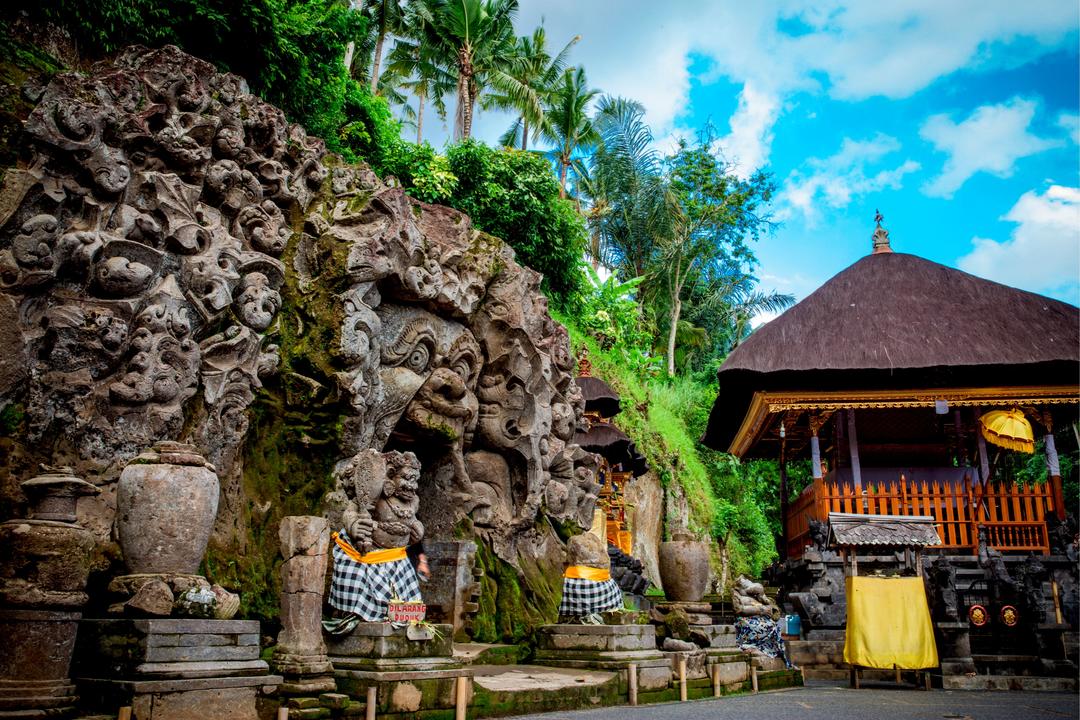
Goa Gajah (Elephant Cave), Bali
Overview: Goa Gajah, commonly known as the Elephant Cave, is an archaeological site and sacred temple located near Ubud, Bali. Despite its name, there are no elephants here; the name possibly derives from the nearby Elephant River or from the Sanskrit word "Gajah" meaning elephant. The site dates back to the 11th century and features a cave, ancient bathing pools, and a range of Hindu and Buddhist relics. It is an important cultural and historical site in Bali, attracting visitors with its mystical atmosphere and intriguing history.
Key Highlights:
- The Cave Entrance:
- The entrance to the cave is the most iconic feature of Goa Gajah. It is carved to resemble a demonic mouth with menacing expressions, intended to ward off evil spirits. The intricate carvings around the entrance are detailed and fascinating.
- Inside the Cave:
- Inside the cave, you will find small alcoves that are thought to have been used for meditation. There are also statues of Hindu gods such as Ganesha, the elephant-headed god, and lingam and yoni, symbols of Shiva.
- Bathing Pools:
- In front of the cave are two rectangular bathing pools with water fountains. These pools were discovered in the 1950s and are believed to be used for ritual bathing. The water is supplied by a sacred spring, and the statues in the pools are beautifully carved.
- Surrounding Area:
- The site is surrounded by lush greenery and beautiful gardens, making it a peaceful and serene place to explore. There are also several other ancient structures and a river nearby, adding to the tranquil atmosphere.
- Historical and Cultural Significance:
- Goa Gajah is a mix of Hindu and Buddhist influences, reflecting Bali's unique religious history. It is an important site for both archaeological and spiritual reasons, providing insights into Bali's past.
Best Time to Visit:
- Seasonal Considerations:
- Dry Season (April to October): This is the best time to visit Goa Gajah, with pleasant weather and minimal rainfall. The dry season offers ideal conditions for exploring the outdoor areas and enjoying the natural beauty of the surroundings.
- Wet Season (November to March): The weather can be unpredictable, with frequent rain showers. However, visiting during the wet season can still be enjoyable, especially on clear days. Just be prepared for the possibility of rain and wear appropriate footwear for potentially muddy paths.
- Time of Day:
- Morning: Early morning visits are recommended for a quieter and more peaceful experience. The temperatures are cooler, and the site is less crowded.
- Afternoon: Afternoons can be warmer and busier, especially after 10:00 AM. If visiting in the afternoon, plan to take breaks and stay hydrated.
- Evening: The site typically closes in the late afternoon, so plan your visit accordingly to ensure you have enough time to explore.
- Weekdays vs. Weekends:
- Weekdays: Generally less crowded, offering a more relaxed experience. It’s easier to navigate the site and enjoy the surroundings without the weekend crowds.
- Weekends: Busier, especially during public holidays and peak tourist seasons. Arriving early can help you avoid the peak crowds and secure a good spot for photography.
Practical Tips:
- Entry Fees: There is an entry fee to visit Goa Gajah. Check the official website or local tourist information for the current rates.
- Clothing: Dress modestly when visiting the temple, covering shoulders and knees. Sarongs and sashes are usually provided at the entrance for those who need them.
- Footwear: Wear comfortable shoes suitable for walking on uneven terrain, especially when exploring the cave and surrounding gardens.
- Photography: Photography is allowed, and there are plenty of opportunities to capture the stunning carvings and natural beauty. Be respectful of the sacred areas and follow any posted guidelines.
- Hydration: Bring water to stay hydrated, especially if visiting during the hotter months. There are vendors outside the temple selling refreshments.
- Respectful Behavior: As a place of worship and historical significance, maintain a respectful demeanor and be mindful of those who are there for religious practices and ceremonies.
Location: Bedulu Village, Blahbatuh, Gianyar Regency, Bali, Indonesia
How to Get There:
- By Car: Goa Gajah is located about 10 minutes from Ubud, easily accessible by car with parking available nearby. Renting a car or hiring a driver is a convenient option.
- By Public Transport: Public transportation options are limited, so it's best to hire a taxi or use a ride-sharing service to reach the temple.
- By Tour: Many tour operators offer packages that include transportation to and from Goa Gajah, often combined with other nearby attractions.
Contact Information:
- Phone: Not typically available, as it is a cultural and historical site.
- Website: Check local tourism websites or contact your accommodation for more information.
Visiting Goa Gajah offers a unique blend of cultural, historical, and spiritual experiences. Whether you’re interested in exploring ancient carvings, learning about Bali’s religious history, or simply enjoying the serene surroundings, Goa Gajah is a must-visit destination in Bali.


COMMENTS